Choosing the right Paper Salad bowl is a practical decision, not just a branding choice. A crisp garden salad behaves differently from a grain bowl with warm ingredients, oily dressing, and heavy toppings. In 2026, buyers can compare kraft paperboard, molded fiber, and coated paper bowls by checking capacity, stiffness, leak resistance, lid fit, and storage needs. Small details matter. A loose lid can shift in transit, while a weak base may sag under a generous portion.
Material claims also deserve a closer look. “Paper-based” does not automatically mean recyclable or compostable in every local system. Buyers should review product specifications, food-contact documentation, and disposal guidance for their markets. Ask suppliers how the bowl performs with acidic dressings and how long it holds food before serving. Test samples with real menu items. A dry sample test alone may miss problems.
One useful design principle is: “A bowl should protect the salad’s texture from packing counter to first bite.” This is an editorially written, composite expert viewpoint, not a verified quotation from a named industry professional. That distinction matters; buyers should seek attributable expertise when making technical or sustainability claims. This guide compares common bowl types, their strengths, and their trade-offs, so purchasing teams can match the container to the meal, service style, and customer expectations. Some choices remain imperfect. Cost, performance, and end-of-life options do not always align.
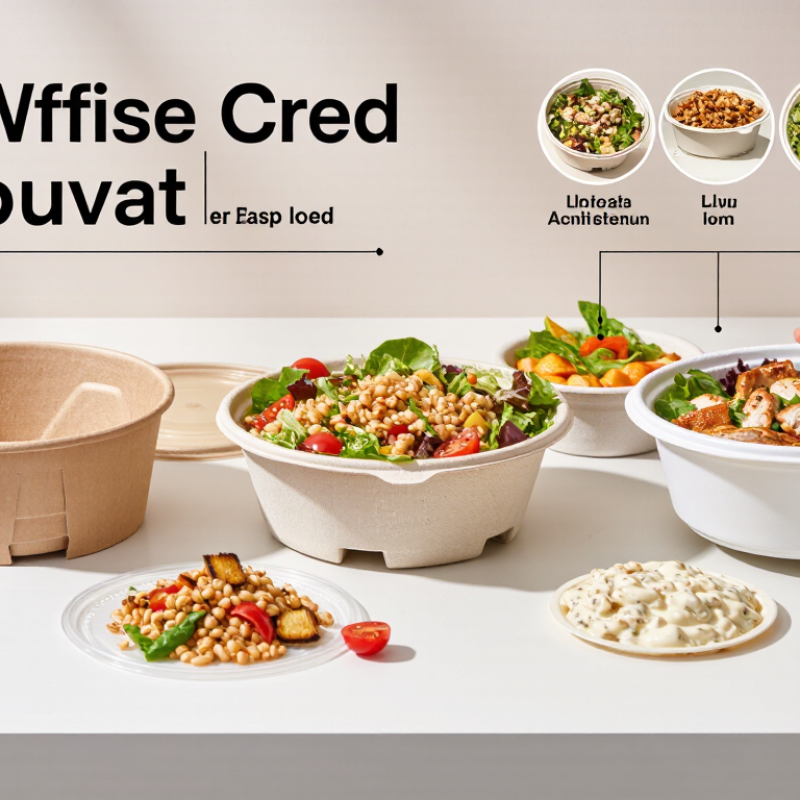
2026 Best Types of Paper Salad Bowls for Buyers
Kraft paper bowls have a natural brown surface and suit salads with grains, greens, and roasted vegetables. Their sturdy appearance can feel practical, but oil and dressing may soften some designs. Whiteboard paperboard offers a clean, bright surface for clear printing and colorful ingredients. Check its lining and rim strength before choosing it for saucy salads. Molded fiber has a textured, formed shape and can feel substantial in hand. Its finish and moisture resistance vary by product, so sample testing matters.
Material recovery figures need careful interpretation. The U.S. Environmental Protection Agency’s 2018 Facts and Figures report estimated that 80.9% of paper and paperboard containers and packaging were recycled in the United States. That figure does not mean every coated salad bowl is recyclable. Ask suppliers about coatings, food-contact documentation, and compatibility with the collection systems used by your customers. Test bowls with dressing for at least the expected service time; a quick dry-food check can miss leaks and soggy bases.
Tips: Test each bowl with your actual portion, dressing, and delivery time. Small differences in lining can matter. Don’t assume brown means compostable or recyclable.

PE-lined paper bowls provide a dependable barrier against moisture and oily dressings. They often suit chilled salads with vinaigrette, pasta, or creamy toppings. The lining can complicate recovery in paper recycling streams, depending on local processing equipment. Check the bowl’s stated temperature range; hot contents may behave differently from cold ones.
PLA linings are plant-derived and can resist water and grease, but their performance depends on formulation and bowl construction. “Compostable” does not automatically mean suitable for backyard composting. Buyers should verify the exact certification and available processing conditions. A sample filled with dressing and held for the expected service time is more useful than a broad claim. Small details matter.
Aqueous coatings are applied as water-based barriers, and some designs may fit existing paper-recovery systems more readily. Results vary: coating weight, seams, and exposure time affect leakage. Unlined paper avoids a separate barrier layer, but it can soften quickly when salad moisture collects at the base. Not ideal for every menu. For a practical comparison, test the actual portion size, chilled storage period, and transport conditions. Inspect the bottom seam after an hour, not just after filling. I would also ask suppliers for test data, though one test rarely reflects every kitchen or delivery route.
Paper salad bowls can look simple, but their food-contact paperwork deserves close inspection. FDA 21 CFR 176.170 covers paper and paperboard components intended for contact with aqueous or fatty foods. It sets conditions and limits for extractives, so the intended food, contact time, and temperature matter. A cold leafy salad is not the same use case as a warm, oily entrée. Details matter.
Ask suppliers for documentation identifying the paperboard and its intended conditions of use. Check coatings, adhesives, and inks separately; compliance of the base sheet alone does not establish compliance of the finished bowl. FDA regulations do not amount to blanket approval of every bowl. Request relevant test results or compliance statements, and verify that they match your actual service conditions. That part is easy to miss.
Material sustainability is a separate question. The U.S. EPA’s 2018 Advancing Sustainable Materials Management report recorded a 68.2% recycling rate for paper and paperboard overall. That figure does not prove a particular bowl is recyclable or food-contact compliant. Local collection rules and barrier layers can change the answer. Suppliers’ documents may also leave gaps, so buyers should ask specific follow-up questions rather than rely on a broad “food safe” claim. Some uncertainty remains.
Paper salad bowls may look alike on a shelf, but their compostability depends on the whole construction. A paper bowl with a moisture-resistant lining must be assessed as a finished article, not judged by its paper content alone. ASTM D6868 covers compostable plastic coatings and additives attached to paper substrates. Its commonly cited benchmark is at least 90% biodegradation within 180 days under controlled aerobic composting conditions. That is not a promise of rapid breakdown in a backyard pile or landfill.
Check the test evidence. ASTM D6868 also addresses disintegration, regulated metals, and effects on compost quality. Ask suppliers for reports identifying the exact bowl, coating, and test conditions. A certificate for a similar product is not enough. Details matter. The U.S. Environmental Protection Agency reported that about 25 million tons of municipal solid waste were composted in 2018, roughly 8.5% of total waste generated. This shows why disposal access matters: a compliant bowl may still be landfilled where commercial composting collection is unavailable.
For buyers, compare rim strength, leak resistance, and coating type alongside test results. Fill samples with dressing and chilled vegetables, then check for seepage after 30 minutes. One awkward trade-off remains: stronger barriers can complicate composting, while lighter coatings may soften during service. Confirm the bowl’s documented performance and whether local facilities accept coated food-service packaging.
2026 Best Types of Paper Salad Bowls for Buyers
Capacity and shape should match the actual menu, not just the photo on a supplier sheet. A shallow, wide bowl suits leafy salads and toppings; a deeper bowl holds grain salads and heavier portions. For a typical lunch serving, test the filled bowl with dressing, protein, and a fork inside. Check whether the rim still closes cleanly. Too much headspace lets ingredients shift, while an overfilled bowl can distort its lid. Fit matters. Compartments help keep crunchy toppings separate, but reduce usable volume and may complicate lid selection.
Leak resistance depends on the full construction: paperboard stiffness, lining, seams, and time in transit. Test with acidic dressing, then tilt the bowl and leave it for the longest expected delivery window. A quick water test is useful, but it does not fully represent oily or acidic foods. The U.S. EPA’s 2018 Facts and Figures report put paper and paperboard recycling at 68.2%; that figure covers the material category, not every food-soiled bowl. Confirm local acceptance before making recyclability claims, and check whether the lid uses a different material.
Lid compatibility deserves a physical trial. Press around the entire rim, stack several filled bowls, and check for popping or leaks after movement. A secure lid can still fog against cold greens or crush delicate leaves. Small details matter. Record the bowl’s usable capacity, lid fit, and leak-test results across more than one production batch; specifications alone can miss real-world variation.
| Paper Bowl Type | Typical Capacity | Leak Resistance | Best Use | Lid Compatibility | Buyer Checks |
|---|---|---|---|---|---|
| Kraft paperboard bowl with PE lining | Common sizes include 16, 24, 32, and 48 US fl oz (about 473, 710, 946, and 1,420 mL). | The lining helps resist moisture and grease. Performance depends on construction, seams, and time in contact with dressing; verify with a filled-bowl test. | Takeout salads, grain bowls, and other foods where reliable moisture resistance is a priority. | Often offered with a matching rolled-rim lid in paperboard, PET, or PP. Confirm rim diameter and fit with the exact bowl. | Ask whether the bowl is intended for cold or hot foods, and check the supplier’s food-contact and disposal information for the sales region. |
| Kraft paperboard bowl with PLA lining | Commonly available in roughly 16–48 US fl oz; exact size ranges vary by bowl design. | Provides a moisture barrier for many cold-food applications. Do not assume it will withstand long holding times or hot liquids without product-specific testing. | Cold salads and chilled takeaway meals where a plant-based lining is preferred. | May pair with paper, PLA, PET, or PP lids, depending on the rim design. A matching lid is not guaranteed across materials or suppliers. | Check the required storage and disposal conditions: industrial compostability claims, where applicable, depend on certification and local collection facilities. |
| Paperboard bowl with aqueous barrier coating | Often supplied in single-serving and meal-size formats, commonly around 16–32 US fl oz. | Barrier performance varies by coating and application. Check resistance to water, oil, and acidic dressings separately rather than relying on a general “leak-resistant” claim. | Cold salads and short-duration takeaway service when the coating is specified for the intended food. | Typically uses a compatible rim-fit lid; lid material and exact diameter depend on the bowl’s tooling. | Request test details for the intended fill temperature, contact time, and dressing type. Confirm whether the coating affects the accepted recycling or composting route. |
| Double-wall or reinforced paperboard bowl | Commonly used for larger servings, often about 24–48 US fl oz. | Extra wall strength can improve handling, but it does not itself make a bowl leakproof. A suitable inner barrier and well-formed seams are still needed. | Hearty salads, meal bowls, and takeaway portions that benefit from a sturdier container. | Requires a lid matched to the bowl’s rim profile and diameter; standard lids may not fit reinforced or unusually shaped rims. | Compare filled-bowl stiffness, stackability, and lid retention. Check that the bowl remains stable during carrying and delivery. |
| Molded-fiber bowl with a food-contact barrier | Sizes vary widely; meal-size versions are commonly available in the approximate 16–32 US fl oz range. | Uncoated molded fiber can absorb liquid. For dressed salads or extended holding, confirm that the bowl has a suitable barrier and test it under actual service conditions. | Salads and prepared meals where a molded-fiber format is preferred and the barrier meets the intended use. | May use a fitted fiber lid or a compatible plastic lid. Check rim shape and closure before ordering. | Inspect for moisture softening, oil penetration, and lid security. Verify material and end-of-life claims for the specific product rather than the material category alone. |
Selection note: Capacities shown are representative market sizes, not fixed industry standards. Confirm usable volume, rim diameter, barrier performance, and lid fit with samples of the exact bowl-and-lid combination before purchase.
Accutek Packaging Equipment Companies, Inc. stands as one of the premier privately owned packaging machinery manufacturers in the United States.

Sign up for all the news about our latest arrivals