2026 Top Sachet Packing Machine Types Which One Is Best?
Choosing a sachet packing machine in 2026 is not simply a price comparison. It is a production decision involving product flow, seal quality, filling accuracy, and future automation needs. A liquid shampoo line may require a different machine from a powder seasoning line. The difference appears at the sealing jaws, dosing system, and cleaning station.
Industry data supports this growing complexity. Grand View Research valued the global flexible packaging market at approximately USD 268.32 billion in 2023. Its report also forecasts continued growth through 2030, driven by convenience packaging, portion control, and expanding food and personal-care applications. Smithers’ report, The Future of Flexible Packaging to 2029, highlights sustainability, material efficiency, and recyclable structures as major development priorities. These trends affect machine selection directly. A machine must handle new films reliably, not merely run yesterday’s laminate.
PMMI research also identifies labor availability and automation as important packaging challenges. That makes multi-lane systems, servo-controlled dosing, and automatic film tracking increasingly attractive. However, faster is not always better. A high-speed sachet packing machine can create waste when the product contains dust, foam, fibers, or inconsistent particle sizes. That assumption deserves scrutiny.
This guide compares vertical form-fill-seal, stick-pack, multi-lane, and premade-pouch systems. It considers output, maintenance access, changeover time, footprint, and total cost of ownership. Real factory conditions matter. A reliable choice should match the product, packaging material, operators, and inspection standards. There is no universal winner. The best machine is the one that performs consistently when production becomes difficult.
What Is a Sachet Packing Machine and How Does It Work?
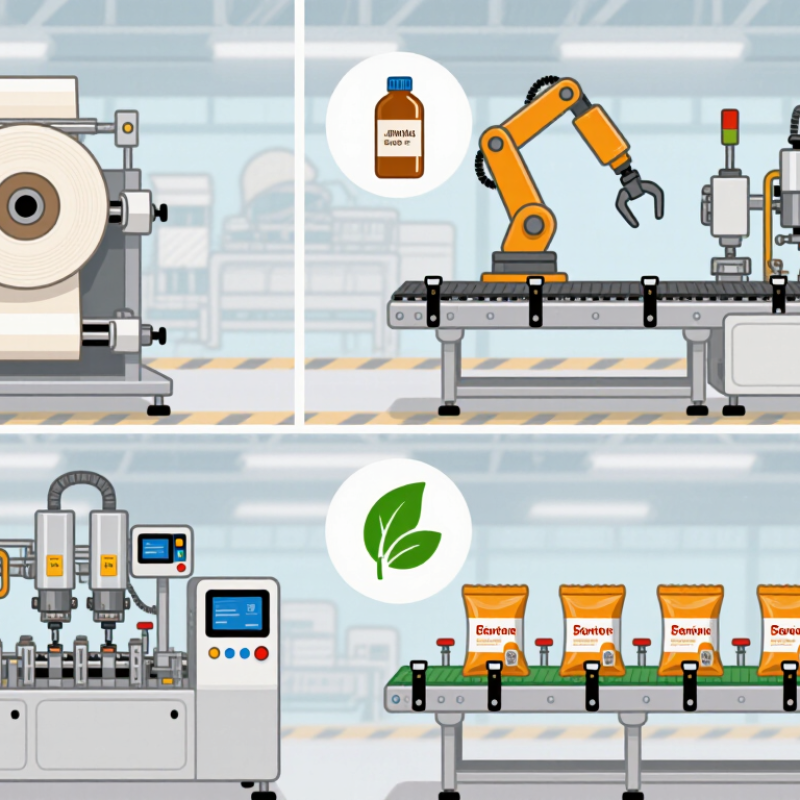
A sachet packing machine forms, fills, and seals small flexible pouches on one production line. It usually starts with a film roll. A forming collar folds the film into a tube, while heated jaws create the first seal. A dosing unit then measures powder, granules, or liquid. The machine seals the top, cuts the sachet, and sends it to collection.
The process looks simple. It is not always simple. Product density, humidity, viscosity, and film tension can change filling accuracy. Auger fillers suit powders, while volumetric cups handle many free-flowing granules. Liquid pumps work better for sauces or gels. Multi-lane systems produce several sachets per cycle, but they demand stronger synchronization and cleaning discipline.
Market data shows why this format remains important. Grand View Research estimated the global flexible packaging market at about US$257 billion in 2022, with continued growth projected through 2030. Smithers also forecasts steady expansion in flexible packaging demand through 2028, supported by lightweight formats and portion control. These reports describe packaging trends, not guaranteed machine performance. Real output depends on the product and film.
A practical selection should examine sachet size, target speed, seal temperature, dosing tolerance, and changeover time. Ask for test runs. Small errors become expensive at high speed. Automation helps, but it cannot repair poor material choices.
2026 Top Sachet Packing Machine Types: Which One Is Best?
Typical output comparison for common sachet packing machine formats
Stick pack and multi-lane sachet machines generally provide higher output because they produce several packs in parallel.
Flat sachet machines are often preferred for liquids, powders, and small portions where flexible filling and sealing are important.
The figures show representative operating levels; actual speed depends on product properties, sachet size, sealing requirements,
number of lanes, and automation settings.
What Are the Main Types of Sachet Packing Machines in 2026?
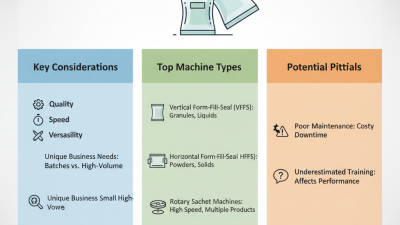
In 2026, sachet packing machines mainly differ by seal style, product type, and production speed. Three-side seal machines create compact packs with one folded edge. They suit powders, liquids, and small granules. Four-side seal machines use separate seals on every edge. Their flat, clean appearance often supports premium single-use products. Stick pack machines produce narrow, elongated sachets. They reduce material use and work well for powders, sugar, and liquid servings.
Liquid sachet machines need accurate pumps and stable filling systems. Powder models often use auger fillers, while granular products require cup or weigh-based systems. Multi-lane machines increase output by forming several sachets at once. Intermittent motion systems offer careful control for delicate products. Continuous systems usually deliver faster production, but they may demand more maintenance and precise film alignment. No type is universally best. That assumption causes expensive mistakes.
Tips:
Match the machine with viscosity, particle size, fill weight, film structure, and target speed. Test your real product before ordering. Watch the seal after storage and transport, not only during a factory trial. Also, leave room for operator training and cleaning. Even experienced teams sometimes underestimate changeover time. That detail can quietly reduce daily output.
How Do Sachet Packing Machines Differ in Speed and Package Format?
Sachet packing machines differ mainly in speed, sealing method, and package format. A three-side seal machine creates compact pouches with a clean, familiar appearance. Four-side seal equipment offers stronger edges and a more structured shape. Stick pack machines produce narrow, elongated sachets for powders, liquids, and small granules.
Speed depends on more than the machine’s advertised cycles per minute. Single-lane systems usually suit smaller production runs and simpler changeovers. Multi-lane machines fill several sachets during each cycle, raising output significantly. However, a faster line can struggle with dusty powder, uneven liquid flow, or weak film tension. I have seen operators reduce speed slightly to prevent leaks and rejected seals. That choice often saves more time than chasing maximum speed.
Tips:
Match the machine to the product first. Check fill accuracy, film width, seal temperature, and package dimensions during trials. Ask for real test data, not only catalog figures. A 4-lane machine may look efficient, but cleaning and adjustment can take longer. This is easy to underestimate. Also, confirm whether you need tear notches, easy-open seals, nitrogen flushing, or date coding. These features affect both speed and package format. A reliable selection balances output, maintenance, material waste, and daily operator experience.
Which Sachet Packing Machine Fits Different Products and Industries?
2026 Top Sachet Packing Machine Types: Which One Is Best?
Choosing a sachet packing machine starts with the product, not the machine catalog. Powdered products often need auger dosing, especially when density changes during production. Free-flowing granules usually suit volumetric cup systems. Liquids require piston or pump-based dosing for stable volume control. Thick sauces, creams, and gels may need heated hoppers or servo-driven filling systems. Small stick packs can improve convenience, while three-side or four-side sachets suit wider product portions.
The industry also changes the decision. Food manufacturers usually prioritize hygiene, gentle product handling, and easy cleaning. Pharmaceutical operations require tighter dose accuracy, traceability, and controlled production conditions. Cosmetic products may need smooth filling for lotions, powders, or sample sizes. Household product lines often value strong seals and durable packaging films. A machine running 120 sachets per minute sounds attractive, but speed means little if seals wrinkle or powder escapes.
In practical line evaluations, I check the actual product first. Test its moisture, particle size, viscosity, and flow behavior. Then measure seal strength, filling variation, film performance, and cleaning time. A supplier’s sample test is useful, but it cannot replace trials with your own material. One uncomfortable lesson is that a cheaper machine may create higher labor costs later. Even experienced teams sometimes underestimate changeover time. The best choice is therefore the machine that delivers reliable quality, safe operation, and manageable maintenance for your specific product.