What Are the 7 Best Shrink Films for Packaging?
Shrink Film can look simple on a roll. Under heat, it becomes a close-fitting layer that protects products, gathers multipacks, and helps keep retail displays tidy. Yet choosing a film by appearance alone can lead to split seams, cloudy packaging, or excessive material use. Details matter. Product shape, sealing equipment, transport conditions, and shelf-life needs all influence the choice.
Packaging scientist and author Dr. Susan Selke has contributed extensively to packaging research and education. No verified quotation from her specifically about shrink films was provided for this introduction, so I will not attribute invented words to her. The guiding principle here is editorial, not a quotation: “The best film fits the product, the process, and the journey.” It is a simple rule. Real packaging decisions, however, can be messier than that.
This guide compares seven common shrink-film options, including PVC, polyolefin, and polyethylene, across practical performance factors. Expect trade-offs. One film may offer clear presentation, while another suits heavier bundles or demanding distribution better. A small bottle, a boxed appliance, and a tray of cans do not ask for the same protection. Film thickness, shrink behavior, seal strength, and operating temperature deserve careful checks on the actual line. Supplier specifications help, but a controlled trial often reveals what a data sheet misses: uneven corners, weak seals, or film that feels too stiff. The aim is not to crown one universal winner. It is to identify a reliable match for your product and packaging setup.
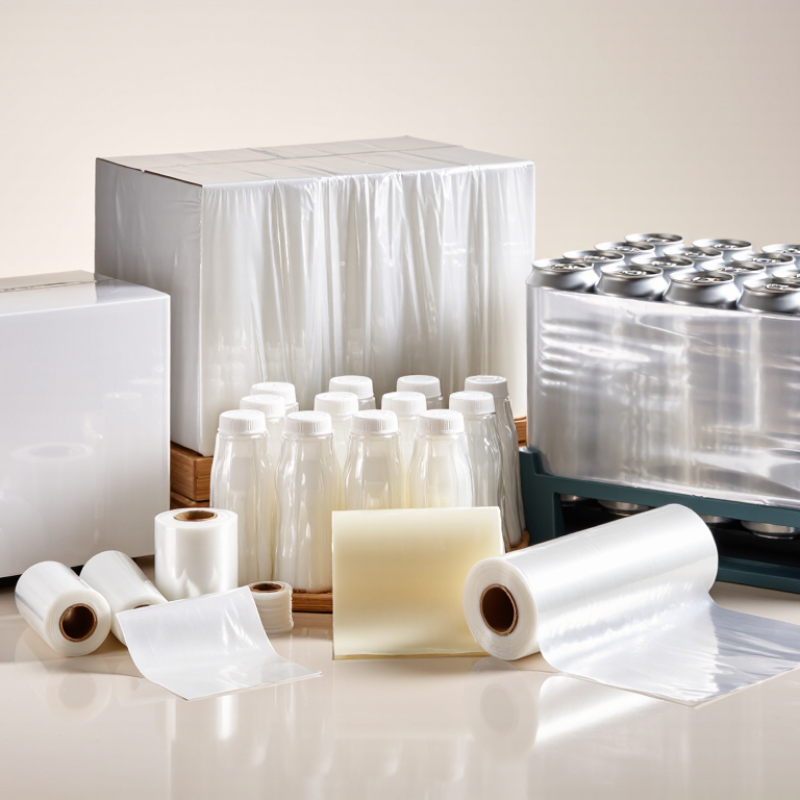
What Shrink Film Is and How It Works
Shrink film is a thermoplastic packaging material that tightens when heated. During manufacture, the polymer is stretched and oriented. In a heat tunnel, that orientation relaxes, pulling the film around a product or bundle. The result is a close-fitting layer, not a vacuum seal. Watch the corners. Sharp edges can puncture thin film, while excess heat can cause wrinkles, haze, or weak seals. Operators typically check film thickness, shrink direction, seal strength, and tunnel temperature on the actual line; small settings changes can alter the finish.
Material choice affects handling and performance. Polyolefin is common for retail multipacks, while polyethylene is often used for heavier bundles; PVC is another option, but its processing and end-of-life considerations differ. The Flexible Packaging Association’s 2023 State of the U.S. Flexible Packaging Industry report estimated 2022 sales at $41.5 billion. That figure covers flexible packaging broadly, not shrink film alone, so it signals industry scale rather than shrink-film demand. A useful trial records package dimensions before and after heating, seal failures, and film use per unit. Test in real conditions. Lab results alone can mislead. Even experienced teams sometimes overheat film while chasing a tighter appearance.
What Makes a Shrink Film Suitable for Packaging
A shrink film suits a package when it contracts evenly without crushing the product, splitting at corners, or leaving loose pockets. Start with the product’s shape, weight, and sensitivity to heat. A thin bottle needs different protection from a sharp-edged carton. Polyolefin films often provide clarity for retail packs, while polyethylene can offer toughness for heavier bundles. No film wins every line. Seal strength, shrink temperature, puncture resistance, and machine speed must work together. ASTM D882 tensile testing and D1003 haze testing can help compare candidate films under consistent conditions.
Recyclability also matters. The OECD’s Global Plastics Outlook (2022) reports that packaging accounted for 40% of global plastic waste generated in 2019. That figure is a reminder to consider material choice and end-of-life pathways, not just appearance. Where local collection accepts compatible films, simpler material structures may be easier to sort than mixed-material constructions. Still, a technically recyclable film is not automatically recycled in every region. Test samples on the actual packaging line: observe seals, wrinkles, and shrink around corners, then check whether the finished pack survives handling. A small trial can reveal problems that a supplier specification sheet will not.
Seven Shrink Film Types and Their Key Properties
Shrink films differ in clarity, shrink force, sealing behavior, and temperature needs. Polyolefin film is clear and tough, making it useful for retail packs; cross-linked polyolefin adds strength for demanding bundling. Polyethylene is flexible and durable, but usually less transparent. Polypropylene offers a glossy finish, though it often needs tighter temperature control. PVC shrinks strongly and displays graphics well, yet can become brittle in cold storage. PETG suits high-shrink sleeves with crisp printing, while OPS offers lightweight sleeves and reliable shaping. PLA is bio-based, but its performance and disposal options depend on film formulation and local processing. Small details matter. A tunnel that runs too hot can distort labels or weaken seals.
Material selection also affects waste planning, though shrink film is only one part of packaging waste. The U.S. EPA’s 2018 Facts and Figures report recorded 82.2 million tons of containers and packaging in municipal solid waste, or 28.1% of the total. That figure covers many packaging formats, not shrink film alone. It is still a useful reminder to check film weight, pack design, and local recovery options together. Test samples on the actual line: a film that looks excellent on a specification sheet may wrinkle around sharp corners or seal poorly at higher speeds. Real production can surprise you.
What Are the 7 Best Shrink Films for Packaging? — Seven Shrink Film Types and Their Key Properties
Film performance varies by formulation, thickness, package geometry, and processing equipment. Confirm shrink, sealing, storage, and end-of-life requirements with the film supplier before selecting a material.
How Shrink Films Compare in Strength, Clarity, and Cost
Shrink-film performance is a trade-off, not a simple ranking. PVC is usually clear and economical, but can feel brittle in cold storage. Standard polyolefin (POF) offers good clarity and balanced strength for retail packs. Cross-linked POF handles sharper corners better, though it often costs more. The difference shows up when a carton corner presses against the film.
PE films, including LDPE and LLDPE, suit heavier bundles and larger packs. They resist tearing well and can be cost-effective, but usually look hazier than POF. PETG is common for full-body labels: it shrinks tightly and displays graphics clearly, with a higher material cost. OPS can offer clear sleeve presentation at a lower cost, but may be less forgiving during handling. That matters.
Cost per roll can mislead. Film gauge, package shape, machine speed, and reject rates all affect cost per finished pack. A thin film may look cheaper until it splits at a sharp edge. Clarity also depends on sealing and heat settings, not just resin. I still find comparisons messy when suppliers quote different gauges. Test a few films on the actual line, then inspect sealed corners and scuffed surfaces before choosing.
How to Choose the Right Shrink Film for Your Packaging Needs
Choosing shrink film starts with the product, not the roll. Seven common options are standard polyolefin, cross-linked polyolefin, polyethylene, PVC, PETG, OPS, and PLA. Polyolefin suits many retail items because it offers clear presentation and neat seals. Cross-linked polyolefin can handle sharper edges or faster packing lines. Polyethylene is often chosen for heavier bundles, while PVC may suit certain simple applications. PETG and OPS are commonly used for shrink sleeves; PLA is an option when its processing and disposal requirements fit the project. These films are not interchangeable.
Check the package weight, shape, surface, and exposure to heat before choosing. A thin film may save material, but it can tear around a box corner. A thicker film may protect better, yet use more material and need different settings. Fit matters. Ask the supplier for a sample roll, then test seal strength, clarity, shrink appearance, and line speed on your actual equipment. Watch for wrinkles near corners and loose film around the base. Small defects become obvious under bright store lighting.
Also consider storage and shipping conditions. A package that sits in a hot vehicle may need different film or tighter process control than one packed and shipped quickly. PLA’s end-of-life benefits depend on suitable collection and processing facilities, so verify local options rather than assuming it will be composted. Test it first. The best choice is the one that protects the product and runs reliably without excessive film or heat.