
What Is the Best Shiny Glossy Paper for 2026?

The best Shiny Glossy Paper for 2026 is not simply the sheet with the brightest surface. It is the one that suits the image, printing process, and final use. A glossy finish can deepen dark tones and make product photographs feel vivid. Under direct light, though, it may create glare. That difference matters on a retail shelf, in a photo book, or beneath a desk lamp.

Print educator Frank Romano is a recognized voice in the printing field. A practical takeaway from his work—not a verbatim quotation—is: “Let the finish serve the image, not compete with it.” Buyers can use that idea when comparing coated stocks, paper weights, and surface shine. Check color reproduction, fingerprints, drying behavior, and how easily pages turn. Ask for a printed sample, not just a digital specification. The sample may reveal a slight color shift or a surface that feels too slick.

This guide compares common glossy paper options for 2026 and explains where each performs well. It also considers cost, durability, and print compatibility. There is no universal winner. A brochure may need strong color impact; a portfolio may need smoother tonal detail. Even a good paper can disappoint when paired with the wrong printer settings. That part is easy to overlook.
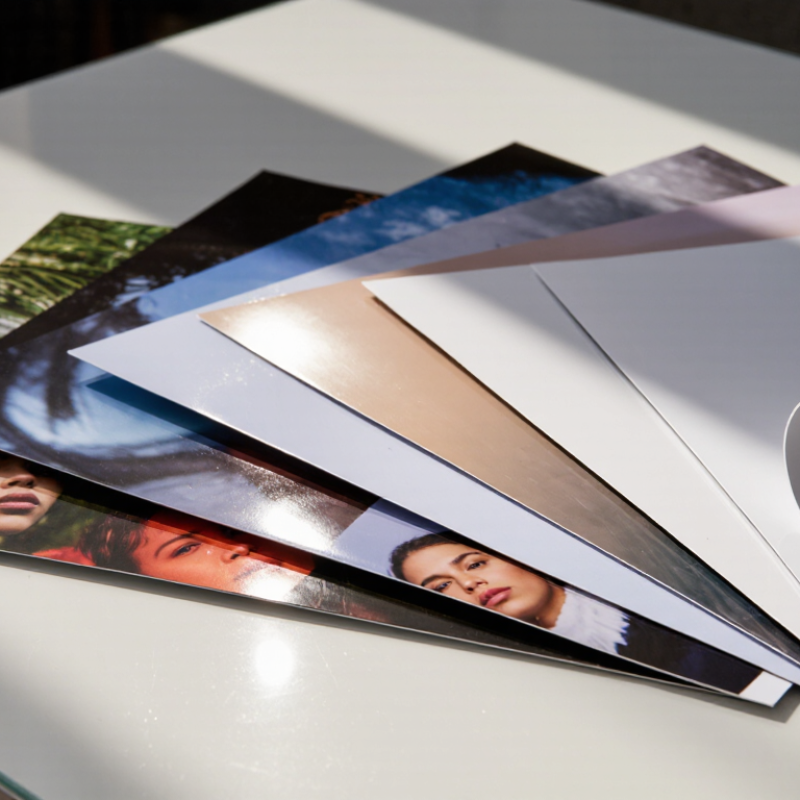
What Is the Best Shiny Glossy Paper for 2026?

What Shiny Glossy Paper Is and How It Is Made

Shiny glossy paper is a paper sheet with a smooth, light-reflecting surface. It is usually made by applying a thin coating of mineral pigments, such as kaolin clay or calcium carbonate, mixed with binders like starch or latex. The coating fills tiny surface gaps. Then, controlled drying and pressure from polished rollers smooth the sheet and increase gloss. The base paper matters, too: its weight, fiber mix, and absorbency affect how the coating sits. Not every glossy sheet uses the same recipe.

The finish is more than decoration. A smoother surface can make printed colors look sharper, but high gloss may also create glare under bright lights. Small differences in coating and drying can change the result. That detail is easy to overlook. According to the European Paper Recycling Council’s 2022 monitoring report, Europe’s paper recycling rate was 79.3%. That figure covers paper overall, not glossy grades alone. Coatings can affect how fibers separate during recycling, so actual results depend on the paper’s construction and the mill’s process. The U.S. Environmental Protection Agency reported that 68.2% of paper and paperboard was recycled in 2018. These figures offer useful context, but they do not guarantee that every coated sheet will be accepted locally.


How Glossy Coatings Affect Color, Detail, and Finish

What Is the Best Shiny Glossy Paper for 2026?

How Glossy Coatings Affect Color, Detail, and Finish

A glossy coating changes how a print looks and feels. Its smooth surface reflects more light, often making colors appear richer and dark areas more pronounced. Fine lines can look crisp because ink spreads less across the coated surface. The effect is noticeable in small details, such as hair, product labels, or the edge of a bright red petal. But gloss is not magic.

The same reflection can hide detail under direct light. Tilt a print near a window, and a bright patch may wash out part of the image. Glossy finishes also show fingerprints more easily, especially on large, dark areas. In print comparisons, I look at the image from several angles, not just under one lamp. Lighting changes the result.

Paper choice depends on the image and where it will be viewed. Gloss can suit colorful photographs and sharp, high-contrast graphics. For subdued artwork or prints handled often, a softer finish may be easier to live with. A small proof helps reveal whether shadows feel too heavy or skin tones look overly vivid. I still find that screen previews can mislead; the final surface has its own character. Test before committing.

What Is the Best Shiny Glossy Paper for 2026? — How Glossy Coatings Affect Color, Detail, and Finish
Paper Type Typical Gloss at 60° Color Appearance Fine-Detail Performance Surface and Finish Best Uses Key Consideration
Cast-coated paper Often about 80–95 gloss units Strong color contrast and a bright, reflective appearance Very good for sharp text and defined edges when the print process is compatible Exceptionally smooth, highly glossy surface Premium covers, invitations, labels, and short-run promotional pieces Its strong reflection can make fingerprints and surface marks more noticeable.
Gloss-coated paper (coated on both sides) Often about 50–80 gloss units Vivid color with good contrast and a polished look Good to very good for photographs, fine lines, and small type Smooth, shiny coating; available in a range of weights Catalogs, brochures, magazines, and product sheets Coated surfaces absorb less ink than uncoated paper, so drying and ink settings matter.
Gloss inkjet-coated paper Varies widely by coating and product; commonly high-gloss Can produce saturated color and deep blacks with a compatible ink-and-paper profile Very good for photographic detail when matched to the printer and ink type Glossy ink-receptive layer designed for inkjet printing Inkjet photo prints, proofing, and short-run image-led materials Check printer compatibility: papers may be formulated for dye, pigment, or specific ink systems.
Resin-coated (RC) photo paper Often about 85–95 gloss units for glossy versions High apparent contrast, rich blacks, and strong color saturation Excellent for photographic detail and smooth tonal transitions Glossy image layer over a resin-coated paper base; generally dimensionally stable Photographic prints, portfolios, and display images Glossy surfaces can show glare under direct light; handling and protective storage are advisable.
Gloss-laminated printed paper Depends on the laminate; commonly produces a high-gloss surface Can make colors appear more saturated and increase visual contrast Print detail depends mainly on the underlying paper and print process Printed sheet covered with a clear glossy film Durable covers, menus, cards, and frequently handled printed pieces Lamination adds protection but can affect recyclability and may introduce glare or reflections.
Gloss-coated paperboard Varies by coating and board construction; commonly medium to high gloss Bright, clean color presentation on a rigid surface Good for bold graphics, product images, and readable type Stiffer than paper; often glossy on the printed side Packaging, point-of-sale displays, postcards, and rigid covers Choose a board and coating suitable for folding or scoring to reduce cracking.
Best all-around choice Choose by measured specification rather than the word “glossy” alone Gloss-coated paper is a versatile balance of color impact and availability Suitable for most commercial images and text when correctly printed Polished appearance without requiring a separate film layer Brochures, catalogs, and general marketing print For photo-critical work, compare printed samples on the exact printer, ink, and paper combination.
Measurement note: Gloss values are indicative ranges, not guarantees. Gloss is commonly measured at a 60° angle; results vary with paper formulation, coating, surface texture, measurement method, and production batch. For reliable comparisons, use the supplier’s technical data and evaluate printed samples under the intended lighting.

Which Paper Specifications Matter Most in 2026

What Is the Best Shiny Glossy Paper for 2026?

For glossy print, start with the job, not the shine. A photo-heavy brochure needs smooth coating and strong color reproduction; a menu needs a surface that tolerates frequent handling. Compare basis weight, caliper, opacity, and gloss. Feel the sheet. A paper can look bright yet feel flimsy, or appear thick but show ink through its back.

For many brochures, a useful starting point is 150–200 g/m² for inside pages and 250–300 g/m² for covers. These are working ranges, not rules. Check caliper and stiffness too, especially if the piece must fold cleanly. Ask suppliers for gloss readings measured consistently; ISO 8254-1 specifies a 75-degree method for paper and board. Then test the actual ink and finish. A sample under office lighting may look different beside a shop window.

Opacity matters for double-sided pages, while brightness affects how colors appear. Request measured samples, not just a product description. CEPI’s 2023 Key Statistics report lists a 79.3% paper-and-board recycling rate in Europe, but that figure does not guarantee every coated sheet is accepted locally. Confirm local collection rules and ask about coating composition. I would not choose the highest gloss automatically; reflections can obscure small type, and that trade-off is easy to miss on a screen.

Best Glossy Paper Types for Photos, Marketing, and Crafts

For vivid photo prints, glossy photo paper usually delivers strong color and crisp detail. Its smooth coating helps skies appear saturated and fine edges stay defined. The trade-off is glare, especially under bright room lights, and fingerprints show easily. For framed portraits or albums handled often, satin or luster paper can feel more forgiving. It keeps much of the color depth with less shine. It depends.

Marketing materials need a different balance. Heavier glossy stock can make product cards, menus, and small flyers feel substantial. Check that the paper suits your printer: inkjet coatings and laser-compatible surfaces are not always interchangeable. A short test print can reveal smudging, curled corners, or colors that look darker than expected. For crafts, lighter glossy sheets work well for cutouts, labels, and layered decorations. Yet very slick surfaces may resist some glues, so test a scrap before making a whole batch.

Tips: Match paper weight to the project, not just the finish. Let fresh prints dry fully before stacking them. Compare a small sample in the lighting where it will be displayed. I have found that the “best” sheet is sometimes simply the one that handles cleanly and prints consistently.

How to Choose Glossy Paper for Your Printer and Project

What Is the Best Shiny Glossy Paper for 2026?
How to Choose Glossy Paper for Your Printer and Project

The best glossy paper is the one your printer can feed and finish cleanly. Check the package for inkjet or laser compatibility; coatings are not interchangeable. Inkjet sheets may need extra drying time, while laser printers use heat that can affect an unsuitable coating. A quick test helps. Print a small image and inspect dark areas, fine text, and edges for smearing or curl. For photos, choose a smooth, bright surface. For flyers, a lighter sheet may feed more easily and cost less. Check the printer manual before buying.

Paper weight offers a useful comparison, but it is not a guarantee of print quality. ISO 536:2019 specifies how paper grammage is measured in grams per square metre; compare that figure with your printer’s supported media range. Also check sheet size, coating, and whether the tray supports thick stock. Gloss can make colors appear vivid, yet glare may hinder reading under bright lights. I’d test the paper in the intended setting. It is easy to overlook lighting. For project planning, the US EPA’s 2020 Advancing Sustainable Materials Management report estimated an overall 68.2% recycling rate for paper and paperboard in 2018. That figure is not specific to glossy sheets, so check local recycling guidance before disposal.

Shopping cart