How to Choose the Best Gauze Pad for Your Needs?
Choosing a Gauze Pad is not just a matter of picking the softest square on the shelf. The right option depends on the wound, the amount of drainage, and how often the dressing needs changing. A small, dry incision may need little absorbency; a heavily draining wound can soak through quickly. That difference matters.
The World Health Organization’s Global Guidelines for the Prevention of Surgical Site Infection report an estimated 11.8 surgical-site infections per 100 surgeries in studies from developing countries (WHO, 2016). This figure is not a measure of gauze effectiveness, but it highlights why careful wound care and appropriate dressing choices matter. A dressing cannot prevent every complication. Still, sterile packaging, suitable absorbency, and low-lint construction are practical details worth checking. For example, a pad that sticks to a healing wound may make removal uncomfortable and disrupt fragile tissue. Small detail. Big difference.
This guide compares common gauze materials, sizes, and uses, while explaining when professional advice is important. It also distinguishes sterile pads for open wounds from nonsterile options used for other purposes. Product labels can be confusing, and absorbency claims do not always tell the whole story. Even experienced caregivers may focus too much on price or thickness. A better choice considers the wound’s condition, the manufacturer’s instructions, and guidance from a qualified healthcare professional. No single Gauze Pad suits every situation.
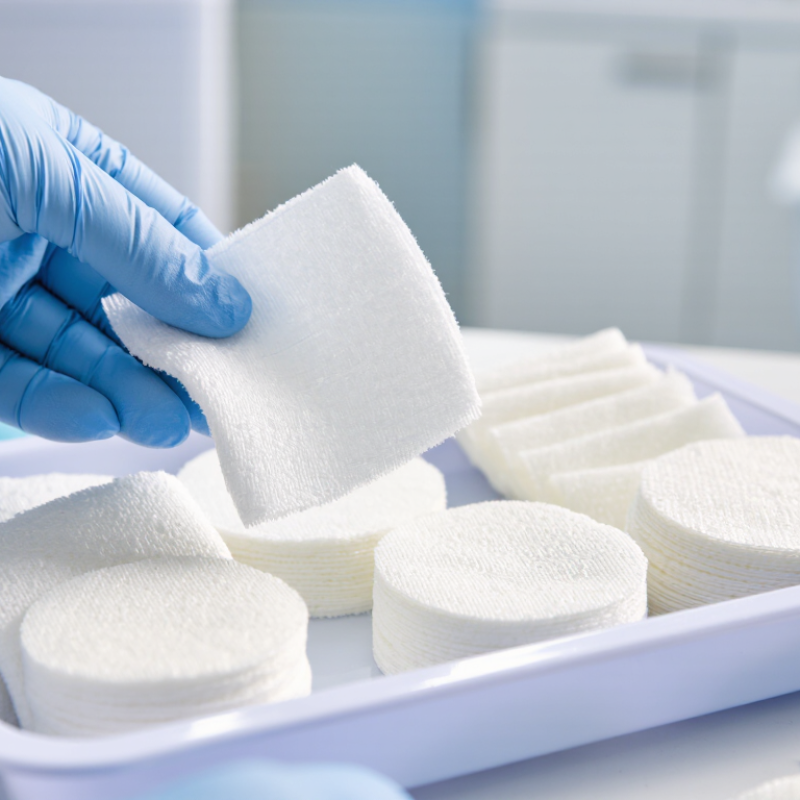
Define the Wound Type and Dressing Purpose Before Choosing Gauze
Before selecting gauze, identify the wound’s depth, location, moisture, and likely purpose of the dressing. A shallow abrasion may need a protective cover that will not cling to its surface. A deeper wound with drainage may need absorbent gauze, changed when wet or soiled. Not every wound needs packing. If a clinician recommends packing a cavity, use a small amount loosely; tight packing can add pressure and interfere with drainage. For fragile surrounding skin, consider how removal may pull at the edges.
Evidence does not point to one gauze or dressing as best for every wound. A 2017 Cochrane review assessed 51 studies involving 2,947 people with pressure ulcers and found the evidence too uncertain to identify a consistently superior dressing. That finding is a useful caution: match the product to the wound, not a broad promise on the package. Check whether the pad is sterile when needed, whether its size covers the wound without excess friction, and whether it stays in place. If pain, redness, warmth, swelling, or drainage worsens, seek clinical advice rather than simply switching pads.
Compare Pad Size and Ply: 10 × 10 cm, 8-Ply Pads Are Common Formats
Gauze pad labels usually show two useful details: dimensions and ply. A 10 × 10 cm pad covers more area than a smaller format, which can help when dressing a broad scrape or protecting a larger patch of skin. For a small finger wound, that same pad may bunch at the edges. Check whether the stated measurement describes the folded pad, especially if the package is unclear. Labels can be easy to misread. That matters.
Ply refers to the number of gauze layers. An 8-ply pad is a common format, offering more thickness and potential absorbency than a thinner pad of similar size. Still, ply alone does not tell the whole story: weave, material, and how much fluid the dressing needs to manage also matter. An 8-ply pad may feel reassuringly substantial, but it can be bulky under tape or less comfortable over a joint. Not always ideal.
Match the size to the area that needs coverage, with enough margin to secure the pad without excessive overlap. Consider the wound’s location and drainage, and follow any care instructions from a qualified clinician. If the pad sticks, leaks, or shifts when you move, the size or dressing setup may need reconsideration. Check the package for sterile status when that is required for the intended use.
How to Choose the Best Gauze Pad for Your Needs?
Compare pad size and ply: 10 × 10 cm, 8-ply pads are a common format.
The bars show the pad’s face area, calculated from its dimensions. A larger area covers more surface; ply indicates the number of gauze layers and does not, by itself, guarantee a specific level of absorbency. These are representative formats—check the product label for exact specifications.
Choose Sterile or Nonsterile Gauze Based on Aseptic-Handling Needs
Sterile gauze is the safer choice when a pad will touch an open wound, a surgical incision, or exposed tissue. Its sealed packaging helps protect the pad before use, but only if the wrapper is dry, intact, and within its expiry date. Open it just before dressing the wound, and avoid touching the wound-contact surface. Small details matter.
The World Health Organization’s 2016 Global Guidelines for the Prevention of Surgical Site Infection report that surgical-site infections affect about 11% of patients undergoing surgery in low- and middle-income countries. That figure does not mean sterile gauze alone prevents infection; hand hygiene, clean technique, and appropriate wound care also matter. For tasks involving intact skin, cushioning, or cleaning around—not inside—a wound, nonsterile gauze may be suitable when a clinician’s instructions allow it. Check the care plan if you are unsure. I have seen people choose sterile pads automatically, which feels cautious, but it can obscure the more important question: will the gauze contact the wound, and can you handle it without contaminating it?
Check Cotton Gauze Requirements Against EN 14079
A gauze pad may look simple, but its weave and absorbency affect how it handles fluid. Check whether the product is made from absorbent cotton gauze and whether the supplier identifies EN 14079 as the applicable standard. The standard sets requirements and test methods for medical absorbent cotton gauze. A label alone is not enough.
Review the technical sheet and test records. Look for relevant checks on absorbency, dimensions, mass, tensile strength, and chemical properties. Confirm that the reported results apply to the finished gauze, not just its raw cotton. Ask for batch-specific documentation when consistency matters. Small differences in weave or layering can change how a pad feels and performs. Details matter.
Match the pad’s size, layers, and format to its intended use. Also check whether it is sterile or non-sterile; EN 14079 conformity does not by itself establish sterility or suitability for every procedure. A certificate helps, but it cannot answer every practical question. I would compare the specification with the actual product, including its edges and packaging. It is easy to overread a standard, and worth checking the current edition and scope with the supplier.
Review Biocompatibility and Quality Systems Under ISO 10993-1 and ISO 13485
How to Choose the Best Gauze Pad for Your Needs?
A gauze pad touches tissue, so assess its biological safety alongside absorbency and fit. ISO 10993-1 guides biological evaluation based on contact type and duration. A pad used on intact skin differs from one contacting an open wound. Ask for evidence covering the finished device, including materials, dyes, residues, and sterilization effects. “Biocompatible” alone is not enough. Review the rationale and test reports, not just a supplier’s claim. ISO 10993-1 supports risk-based evaluation; it does not award a universal safety certificate.
Quality systems matter, too. ISO 13485 requires controlled processes for design, suppliers, production, and corrective action. These controls can help trace a problem from a batch record to a packaging seal. ISO’s 2023 Survey counted 36,725 valid ISO 13485 certificates worldwide. That figure shows broad adoption, not proof that every certified site makes every pad well. Check whether the certificate covers the relevant manufacturing site and product scope. Then inspect practical details: intact packaging, clear lot identification, low lint, and suitable absorbency. Paperwork can miss a rough edge. I would also ask how changes to fibers or sterilization trigger renewed biological review. The answer may reveal more than a polished certificate.