How Industrial Vision Inspection Will Transform 2026 Canton Fair?
As the 139th Canton Fair approaches in 2026, the role of Industrial Vision Inspection is set to transform the event significantly. The fair, scheduled from April 15 to May 5, will focus on advanced manufacturing, electronics, home appliances, and a myriad of other sectors. In recent years, the adoption of AI and advanced inspection technologies has reshaped industries. According to a report by MarketsandMarkets, the global industrial vision market is expected to grow to $14.1 billion by 2026.
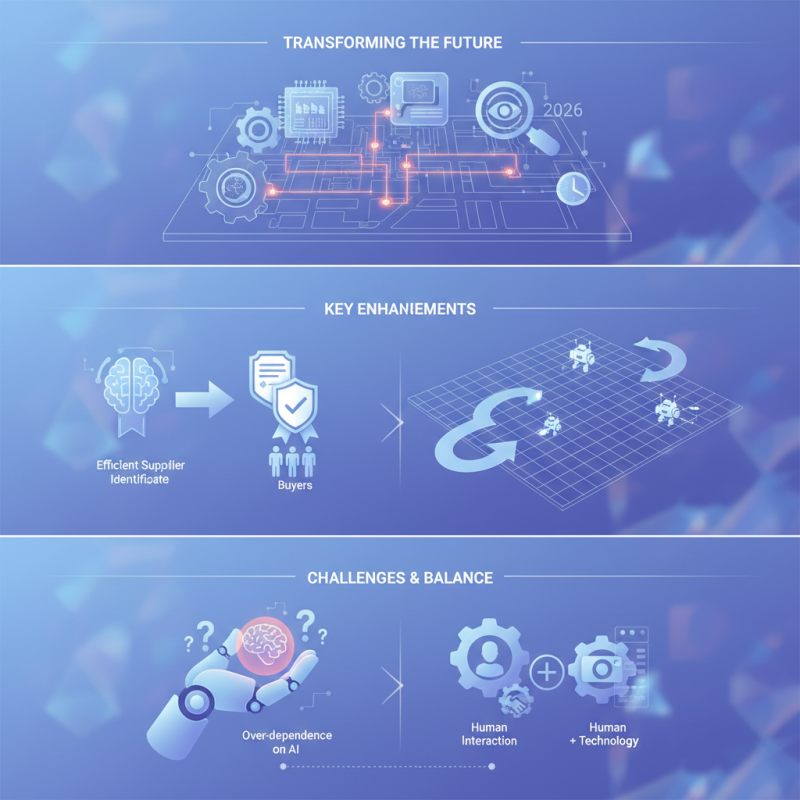
This evolution will enhance the efficiency of identifying quality suppliers. For instance, the new AI-driven search and navigation tools at the Fair will enable buyers to swiftly find suppliers with relevant certifications, such as ISO and CE standards. With 1.55 million square meters of exhibition space, these advancements aim to improve movement efficiency within the fairgrounds. However, the integration of such technologies also brings challenges. Over-dependence on AI may lead to overlooking human insights, which are crucial for making informed decisions.
Incorporating Industrial Vision Inspection will streamline processes but may introduce pitfalls. The reliance on technology can sometimes obscure the need for personal connections. Balancing technology with human interaction is essential for nurturing effective business relationships at the Canton Fair.
The Rise of Industrial Vision Inspection in Manufacturing
The rise of industrial vision inspection is a game changer in manufacturing. This technology enhances quality control significantly. Machines now see what humans might miss. They identify flaws in products with greater accuracy. For instance, tiny defects can escape the naked eye. Vision systems detect these issues immediately. They use cameras and software to analyze products swiftly. The process is faster than manual checks.
Manufacturers are already noticing the benefits. Production lines have fewer errors. This means less waste and higher efficiency. However, integrating this technology poses challenges. Training personnel can be a hurdle. Some workers may resist new systems. Trusting machines over human judgment takes time. Yet, the ongoing improvements in technology can address these concerns. With more reliable data, companies can make informed decisions.
In the context of the 2026 Canton Fair, industrial vision inspection will play a crucial role. This event showcases innovations, and manufacturers will highlight their capabilities. However, some companies may struggle to adapt quickly. Observing peers’ successful implementations could inspire change. The fair might feature discussions on overcoming these challenges. Engaging with others in the industry could foster progress and collaboration.
Key Technologies Driving Vision Inspection in 2026
The 2026 Canton Fair will witness a significant transformation driven by innovative vision inspection technologies. These advancements will enhance quality control and boost efficiencies across various sectors. Companies will increasingly rely on vision systems to inspect products accurately and in real-time. Utilizing AI and machine learning, these systems are capable of detecting defects that the human eye might miss.
Machine vision technology is gaining traction, yet it still faces challenges. Integration into existing production lines can be complex. Some systems may require extensive training for personnel. Data management poses another issue; handling large volumes of visual data can be overwhelming. Balancing automation with human oversight is crucial.
Despite these hurdles, the potential rewards are substantial. Enhanced accuracy in quality inspection can reduce waste and improve overall productivity. Companies must remain attentive to both the possibilities and the limitations of these technologies. Continued investment in training and system upgrades is essential for success in this rapidly evolving landscape.
Impact of AI and Machine Learning on Quality Control Processes
The impact of AI and machine learning on quality control processes is undeniable. As we approach the 2026 Canton Fair, these technologies will significantly reshape inspection methods. According to a recent report by MarketsandMarkets, the use of AI in manufacturing could lead to a 40% reduction in defects. This statistics emphasizes the potential for improved quality control.
AI systems can analyze data from products much faster than human inspectors. This speed allows for real-time quality assessments. Machine learning algorithms can learn from past defects, predicting potential failures before they happen. A survey indicated that 70% of manufacturers are exploring AI solutions for quality improvement. Yet, the integration of these systems may not be flawless. Some companies face challenges with data quality and system compatibility.
Tip: Embrace small-scale trials when implementing AI. This allows companies to assess its effectiveness before full deployment. Iterative improvements based on feedback will ensure smoother transitions.
Additionally, investing in employee training is crucial. Workers need to be familiar with AI tools. They should know how to interpret data effectively. Regular training sessions can help bridge the knowledge gap.
Tip: Encourage a culture of feedback about the AI systems in use. Open communication can highlight issues and spark innovation. This will contribute to a more resilient quality control process.
Benefits of Implementing Vision Inspection at Canton Fair
The Canton Fair in 2026 is about to undergo significant changes with the introduction of industrial vision inspection technology. This innovation promises to enhance product quality and consistency. Exhibitors can expect faster inspections, reducing the time spent on quality checks. With real-time analysis, issues can be identified swiftly, improving efficiency.
Implementing vision inspection leads to substantial benefits. Imagine a scenario where every product is visually checked for flaws. Such a system minimizes human error, yielding higher accuracy. However, this technology is not without challenges. The initial cost can be daunting for some businesses. Training staff to effectively utilize the system demands time and effort.
Moreover, while vision inspection offers reliability, it may not capture every nuance of quality. Some subtle defects may slip through. Thus, a combination of traditional inspection methods and technology might be essential for optimal results. Embracing change is necessary, yet it requires careful consideration of both advantages and limitations.
Future Trends in Industrial Vision Inspection Post-2026
Industrial vision inspection is set to revolutionize trade events like the Canton Fair. By 2026, advanced technologies will enhance product quality checks. Automated systems will streamline the inspection process. This change could lead to fewer defects in products displayed at large expos. However, there are challenges to consider. Not all manufacturers are ready to adopt these technologies evenly.
As we look beyond 2026, more industries will likely embrace these innovations. The future may feature smart cameras that analyze products in real-time. Data analytics will provide insights into quality trends. Yet, reliance on machines raises questions about human oversight. What if the system fails? A balance between automation and human input is essential for safe operations. We need to think critically about how this evolution will impact traditional inspection roles. It’s an exciting future, but not without uncertainties.
How Industrial Vision Inspection Will Transform 2026 Canton Fair? - Future Trends in Industrial Vision Inspection Post-2026
| Inspection Technology | Application Area | Expected Benefits | Adoption Rate by 2026 |
| 2D Vision Systems | Manufacturing Quality Control | Increased Accuracy | 70% |
| 3D Vision Systems | Logistics and Packaging | Enhanced Efficiency | 50% |
| Infrared Inspection | Electrical and Mechanical Inspections | Early Fault Detection | 60% |
| Machine Learning Algorithms | Predictive Maintenance | Cost Savings | 40% |
| Multi-Spectral Imaging | Food Safety and Quality | Improved Safety Compliance | 30% |