Choosing a Pvc Sheet manufacturer in China takes more than comparing prices. A low quote can hide uneven thickness, rough edges, or inconsistent color between batches. Buyers should check the intended use, sheet dimensions, surface finish, impact needs, and whether the supplier can provide relevant test data. Ask for a sample. Measure it. Look closely at the cut edge and finish under ordinary light. Small differences matter when sheets must fit together or meet a visible finish standard.
This guide compares manufacturers through practical signals: production capabilities, product range, quality controls, customization, communication, and shipping support. No single supplier is best for every project. A sign maker may value surface consistency, while a fabricator may focus on machinability and dimensional stability. PVC materials specialist Dr. Michael Schiller’s technical writing offers a useful principle, paraphrased here rather than presented as a verbatim quotation: performance depends on formulation and processing, not the material name alone. That distinction deserves attention. Supplier claims are not a substitute for specifications or sample checks. Even a polished catalog can leave questions unanswered. Readers should confirm tolerances, packaging, and batch consistency directly before ordering. The shortlist that follows is a starting point, not a guarantee; buyers should match each manufacturer’s evidence to their actual application.
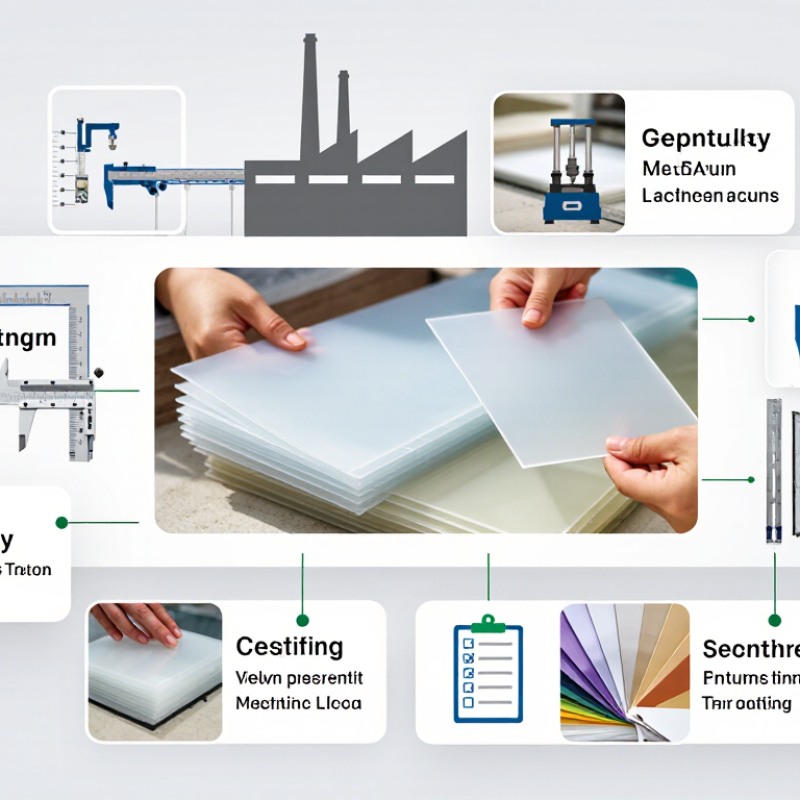
PVC sheets are flat panels made from polyvinyl chloride resin, with formulations ranging from rigid to flexible. They are lightweight, moisture-resistant, and easy to cut, weld, or thermoform. In workshops, rigid sheets often become machine guards, equipment housings, and chemical-storage cabinet liners. Foam PVC sheets are lighter and commonly used for indoor displays and sign panels. Clear grades can protect viewing windows, though they may scratch more easily than glass.
Grand View Research estimated the global PVC market at about USD 76.6 billion in 2023. This figure covers PVC products broadly, not sheets alone, but it reflects the material’s wide industrial use. In construction, sheets can serve as wall cladding, partitions, and protective surfaces. They also appear in packaging and fabrication. Selection depends on more than price: thickness, impact resistance, temperature, and chemical exposure all matter. A sheet suitable for a dry display panel may warp or fail in a hot, demanding setting.
Tip: Check the product’s technical data sheet for grade, thickness tolerance, and service limits. Test a small sample first; real-world performance can differ from a catalogue description.

China’s PVC sheet industry is organized less like a single production line and more like a layered supply network. Upstream producers supply PVC resin and additives, while compounders adjust formulations for stiffness, color, impact resistance, or outdoor exposure. Sheet makers blend, heat, and extrude the material through calibrated dies, cooling rolls, and cutting systems. Small adjustments matter. A few degrees can change surface finish or thickness consistency.
Manufacturers vary in their roles. Some focus on standard rigid sheets for signs, construction, or fabrication; others make flexible, foam-core, or specialty grades. Downstream converters may cut, print, laminate, or thermoform sheets to match customer drawings. This division lets buyers source either a basic panel or a processed component. The boundary is not always clear. A factory may handle several steps, yet outsource testing or complex finishing.
Production is often clustered around industrial zones with access to resin, machinery, ports, and skilled operators, although capabilities differ from plant to plant. Procurement teams should examine sample thickness, weight, edge quality, and batch records, not just a catalog description. Ask how the supplier controls recycled content, color variation, and dimensional tolerances. Paperwork can look tidy. Real batches still vary, and that deserves honest checking.
Leading PVC sheet manufacturers in China are best identified by process control, product consistency, and documented testing—not factory size alone. China Chlor-Alkali Industry Association statistics put national PVC resin output at about 22.36 million tonnes in 2023. The National Bureau of Statistics reported 74.885 million tonnes of plastic products that year. These figures show a large materials base, but neither measures PVC sheet output specifically. Read them as industry context, not a manufacturer ranking.
For buyers, stronger manufacturers can explain how they control sheet thickness, surface finish, and batch variation. Ask for recent inspection records and samples from more than one production run. Check whether the supplier can provide the requested rigid or flexible grade, thickness, color, and processing details. Look closely at the edges and surface under steady light. Small defects matter. A polished sample is not enough; it may not represent routine production. This is where comparisons become less tidy: public, independently audited data rarely ranks Chinese sheet makers on equal terms. A careful shortlist should weigh test evidence, production capability, and clear answers about quality control.
Chinese PVC sheet manufacturers differ less by location than by the products and processes they can control. Some focus on rigid sheets for signage, partitions, or equipment covers. Others produce flexible rolls or foamed boards with a lighter core. Thickness, sheet width, surface texture, and color options can vary widely. Details matter.
Production capability is not just a long product list. Ask whether the factory can hold thickness tolerances across a full batch, not only on a sample. Check how it manages edge quality, flatness, and color consistency. A glossy sheet may look smooth under showroom lights, while small surface marks become obvious after cutting. That takes time. A capable supplier should explain its inspection steps and provide clear technical data.
Customization also separates manufacturers. One may offer standard sizes with shorter lead times; another may handle custom colors, embossed finishes, or printed surfaces, but require larger orders. Neither approach is automatically better. Buyers should compare samples under their own lighting and test the material with their intended fabrication method. A good sample is useful, but it does not guarantee every shipment will match. That is worth questioning.
Choosing a PVC sheet manufacturer in China starts with defining the sheet’s real working conditions. Will it face sunlight, cleaning chemicals, impact, or repeated bending? These details affect resin choice, thickness, surface finish, and test requirements. Ask for a written specification, not only a polished sample. Check that production samples match the stated thickness and tolerances.
Fortune Business Insights’ PVC market report estimated the global market at about US$70.22 billion in 2023 and projected growth through 2032. This broad market figure signals substantial demand, but it does not verify any factory’s quality. Request recent batch test reports, material declarations, and traceable production records. Where relevant, compare testing methods with applicable standards for rigid PVC sheets, such as ISO 11833-1. Confirm that the report covers the same grade and thickness you plan to buy.
Inspect how the manufacturer controls consistency. Ask how often operators measure thickness, how defects are recorded, and what happens when a batch fails inspection. A factory audit can help, but one visit cannot prove year-round performance. I would not rely on appearance alone. A glossy panel may still warp after installation. Ask for samples from multiple production runs, then test them under your actual conditions. Some checks may seem excessive; that is better than discovering a mismatch after shipment.
Accutek Packaging Equipment Companies, Inc. stands as one of the premier privately owned packaging machinery manufacturers in the United States.

Sign up for all the news about our latest arrivals