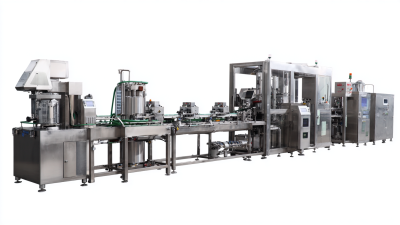
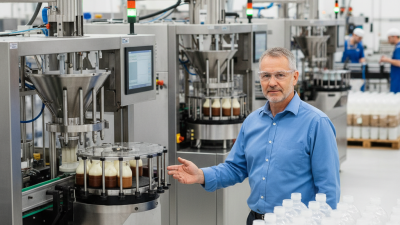
Why Choose a Powder Packing Machine?

Choosing a powder packing machine is not simply a matter of buying faster equipment. It is about protecting product quality, reducing handling errors, and producing consistent packs day after day. Fine powders can drift into seals, cling to funnels, or form dusty clouds when filling starts. Even a small mismatch between the product and machine can lead to underfilled bags, cleanup delays, and wasted material.

A suitable machine gives operators better control over filling accuracy, sealing, and production pace. Auger fillers, for example, can handle many free-flowing and cohesive powders, while the right hopper and agitator help maintain a steady feed. The details matter: a narrow hopper outlet, a sensitive scale, or a poorly matched pouch can change performance on the line. No machine removes every risk.

An illustrative expert perspective—not a verified quotation—might put it this way: “The best powder packing machine is the one that matches the powder, package, and operator, not just the target speed.” This proposed line should be replaced with a verified quotation before publication. When comparing equipment, ask for trials using your actual product and packaging. Watch the fill settle. Check the seals. Measure several packs, not just one. A supplier’s demonstration may look smooth, yet real powders behave differently across batches. That uncertainty deserves attention. A careful choice can improve consistency and reduce routine labor, but it still depends on sound setup, maintenance, and operator training.
Why Choose a Powder Packing Machine?

How Powder Packing Works: 3 Stages from Dosing to Sealing

Why Choose a Powder Packing Machine?

How Powder Packing Works: 3 Stages from Dosing to Sealing

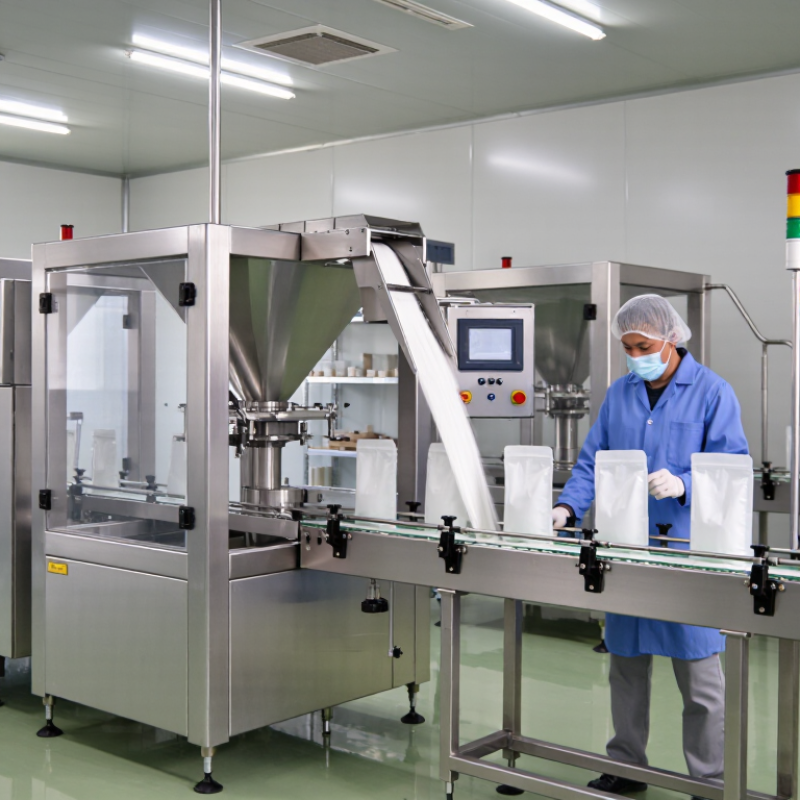
Powder packing usually moves through three connected stages: dosing, filling, and sealing. During dosing, an auger or another metering system measures a target amount. The right setup depends on the powder’s flow and density. Fine flour may behave differently from coarse granules, even at the same weight. Next, the machine directs the dose into a pouch or bag. Consistent filling helps reduce spills and weight variation. Finally, heated jaws seal the package. Powder caught in the seal can weaken it, so clean, well-timed sealing matters.

Tips: Test with your actual powder before choosing settings. Check fill weight, dust around the opening, and seal strength. Small details matter.

A suitable machine can make repeated portions more controlled and reduce manual handling. Still, powder is fussy. Humidity, particle size, and hopper design can change how smoothly it feeds. Operators may need to adjust auger speed or vibration after observing real production runs. No setup is perfect on day one. Keep simple records of settings and results; they make troubleshooting more grounded than guesswork.

Fill Accuracy: OIML R 61 Defines 5 X-Class Accuracy Levels

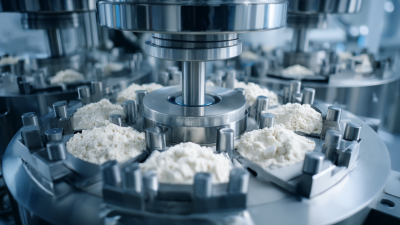
Powder filling looks simple until a fine stream dusts the hopper rim or a dense batch settles differently. Small dose errors can accumulate across thousands of packs. OIML R 61-1:2017 classifies automatic gravimetric filling instruments using five X-class factors: X(0.2), X(0.5), X(1), X(2), and X(5). The factor scales the standard’s permissible variation limits; it is not a direct promise of a fixed percentage error for every product.

That distinction matters on a real line. A free-flowing powder may fill consistently, while a dusty or compacting blend can fluctuate as the hopper empties. Operators should test with the actual powder, target weight, and operating speed. Record repeated fills, then compare the results with the applicable OIML R 61 limits and the instrument’s verification conditions. A tidy average can hide erratic individual packs.

Choose a class that matches product risk and process capability, not just the smallest number on a specification sheet. Tighter variation may require slower dosing, stable material flow, and more frequent checks. The trade-off is easy to underestimate. Even a careful trial can miss seasonal changes in humidity or powder density, so keep monitoring after installation.

Why Choose a Powder Packing Machine? - Fill Accuracy: OIML R 61 Defines 5 X-Class Accuracy Levels
OIML R 61 X-class Class factor How to interpret it Practical relevance to powder filling
X(1) 1 Reference factor for the applicable R 61 tolerances. A useful reference when comparing a machine’s verified weighing performance with the required filling tolerance.
X(0.5) 0.5 Half the reference factor; the applicable class limits are correspondingly tighter. May suit applications seeking closer control of fill variation, subject to product and process testing.
X(0.2) 0.2 One-fifth of the reference factor; a more demanding accuracy class. Relevant where tighter control of giveaway and underfills is important and the powder feeds consistently.
X(0.1) 0.1 One-tenth of the reference factor; tighter limits than X(0.2). Consider when the filling process can maintain stable dosing despite powder-flow and environmental variation.
X(0.05) 0.05 One-twentieth of the reference factor; the tightest of these five listed classes. A demanding target that should be confirmed through testing with the actual powder, package size, and operating conditions.
Important: The X-class factor is applied to the relevant maximum permissible errors specified by OIML R 61; it is not, by itself, a universal percentage error. Applicable limits depend on the instrument and the standard’s test conditions. Actual powder-filling performance should be checked using the intended product and operating setup.

Output Planning: Match Pack Weight to Required Packs per Minute

Choosing a powder packing machine starts with the order, not the machine’s advertised maximum speed. Convert the daily requirement into good packs per minute, then account for breaks, cleaning, changeovers, and rejected packs. A 500-gram pouch target of 1,200 finished packs per hour equals 20 good packs per minute, or 600 kilograms of powder per hour. The arithmetic is simple. Real production is not.

For planning, if trials suggest the line runs effectively 80% of scheduled time, a 20-pack-per-minute target requires a nominal rate of about 25 packs per minute. Treat that 80% as a working assumption, not a guarantee; powder flow, dust control, settling, and seal checks can all change performance. PMMI’s 2023 State of the Industry report projected 4.2% annual growth in U.S. packaging machinery shipments through 2027, pointing to continued investment in packaging capacity. But growth forecasts do not tell you whether a specific powder will dose consistently at speed.

Test the actual product at the intended pack weight. Record average fill weight, under- and overfills, stoppages, and saleable packs per minute across a sustained run. Fine, aerated powder may behave differently from a dense, free-flowing powder, even at the same weight. A short trial can look excellent. Longer runs may expose drift or bridging. Size the machine against verified good output, and leave room for variation rather than planning every shift around peak speed.

Food Safety: ISO 22000:2018 Sets Requirements in Clauses 4–10

Why Choose a Powder Packing Machine?

ISO 22000:2018 organizes food safety management requirements across clauses 4–10, from organizational context to continual improvement. For powder packing, those clauses offer a useful way to examine the whole process, not just the machine. Clause 4 asks teams to understand their context and risks; clause 5 establishes leadership responsibility; clause 6 addresses planning. Powder can cling to hoppers, settle on sealing jaws, or escape during changeovers. These details deserve documented controls.

Clause 7 covers resources, competence, and documented information. Clause 8 focuses on operational control, including prerequisite programs and hazard control. A practical check might record cleaning, inspect product-contact surfaces, and verify seal integrity at defined intervals. Clause 9 calls for monitoring and evaluation; clause 10 requires corrective action and improvement. A clean machine can still be run badly. That part is easy to overlook.

The scale of food safety risk is real. The World Health Organization’s 2015 estimates attribute about 600 million illnesses and 420,000 deaths each year to contaminated food worldwide. These figures are not specific to powdered products, but they show why routine controls matter. A packing machine supports consistent handling; it cannot replace trained staff, validated cleaning, or a working food safety system. Records may look complete, yet a missed residue behind a guard can still matter. That deserves a second look.

Dust Hazard Control: NFPA 68 Classifies Kst from St 0 to St 3

Why Choose a Powder Packing Machine?

Dust Hazard Control: NFPA 68 Classifies Kst from St 0 to St 3

Powder packing machines can limit open handling and help contain dust at filling points. This matters because a fine cloud can form during bag changes, hopper refills, or spills. NFPA 68 uses Kst to classify the explosion severity of explosible dust:

St 0 indicates no explosion,
St 1 covers Kst values up to 200 bar·m/s,
St 2 covers values above 200 through 300, and
St 3 covers values above 300.

A higher class signals greater pressure-rise potential, not a complete measure of site risk.

The St class should come from testing the actual powder; different grades or moisture levels may behave differently. A machine’s enclosure, seals, extraction points, and transfer method can affect how much dust escapes. Still, a tidy-looking filler is not proof of safety. Review dust collection and any explosion protection with a qualified engineer, using the tested material and the full process layout. Kst alone does not determine the right protection.

Tips: Check for dust around bag clamps and hopper lids during routine inspections. Record leaks and clean using methods suited to the material; dry sweeping can put settled dust back into the air.

Shopping cart